

Misophonia and OCD: Uncovering the Intricate Link
 DR. R. Y. Langham
August 7, 2023

Dr. Dianne Stevenson
I am a Clinical Psychologist, with over 12 years experience working in private practice. I work with adults that are struggling with a range of mental health issues. These most commonly include OCD, anxiety, low mood, emotional dysregulation, trauma, relationship difficulties, and stress.

Are you afraid that certain sounds will “trigger” your OCD symptoms? If so, you may be struggling with misophonia OCD. Misophonia is a neurological/behavioral condition that involves a strong aversion or “hatred” for specific sounds that trigger an emotional or behavioral reaction, such as anger, anxiety, fear, frustration, and/or avoidance. In some cases, misophonia can co-occur with OCD.
Obsessive-compulsive disorder or OCD is characterized by non-stop, involuntary, and repetitive obsessions and compulsions, so when a person has misophonia OCD, they engage in compulsions (i.e., rituals or routines) to ease their obsession with “certain sounds.” If you are wondering how misophonia is connected to OCD, look no more because, in this article, we will explore this relationship and provide tips on how to cope with misophonia and OCD comorbidity.
Content



What is Misophonia?
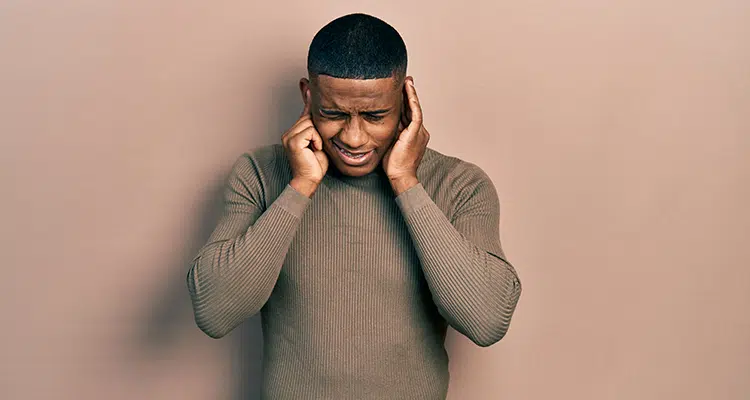
People with misophonia are hypersensitive to specific sounds. These sounds, in turn, trigger emotional distress and urges to engage in certain behaviors – relief. Understand, however, that this hypersensitivity is also found in people who struggle with an anxiety condition like OCD, social anxiety, post-traumatic stress disorder (PTSD), and/or Tourette syndrome (TS).
Because of the similarities between misophonia and anxiety conditions, like OCD, researchers have begun to explore the relationship between misophonia and these conditions, especially how they are similar and different from misophonia, and how brain activities in various brain regions are similar in people who have misophonia and OCD comorbidity.
However, misophonia, like OCD, is not a monolith which means it may look different for each individual. Misophonia symptoms range from mild (i.e., a slight sensitivity to certain sounds) to severe (i.e., extreme sensitivity to certain sounds). A key component of misophonia is that the sounds or “triggers” are very specific and can consist of normal “bodily sounds” like chewing, coughing, sneezing, drinking, laughing, hiccuping, yawning, speaking, snoring, taping, sighing, crying, slurping, smacking, muscle or joint popping, lip-smacking, belching, passing gas, heavy breathing, etc.
In some cases, an extreme hypersensitivity to sound applies to a specific person, for instance, “my partner’s smacking” or “my sister’s slurping.” Other cases may be generalized, for instance, “children’s hiccuping,” “women’s lip-smacking,” “the meowing of kittens,” “the hum of an air conditioner,” “the honking of horns,” “the ringing of a bell or the phone ringing” or “the chatter of people speaking a foreign language.”
According to people with this condition, even temporary or short-lived exposure to the “dreaded” sound can send them into a spiral of distress – i.e., disgust, agitation, anger, confusion, and/or emotional and physical pain. The severity of a “misophonia episode” is not necessarily dependent on the volume or length of the sound. For instance, the low hum of an air conditioner may trigger a full-on meltdown even if the person only hears it for a few seconds or minutes.
Most people with this condition exhibit a behavioral reaction to the specific sound it is usually in the form of deliberate isolation, withdrawal, and/or avoidance of the “sound” or “situation” causing the distress. For instance, a person may avoid attending a loved one’s birthday party because they cannot stand the sound of people chewing, drinking, slurping, eating, or even laughing. Children with misophonia may be triggered by the sound of candy wrappers being opened, the sound of a pencil writing on a piece of paper, a child having a temper tantrum, or a peer chewing gum and blowing bubbles.
Is Misophonia An Anxiety Disorder?

No, it is not.
Some doctors have misdiagnosed misophonia as anxiety, depression, phobias, or obsessive-compulsive disorder (OCD), however, this condition is a separate condition. Although, researchers have theorized that misophonia may be linked to anxiety, and it is possible to struggle with both conditions at the same time. Misophonia can also be a symptom of anxiety, depression, OCD, or another mental health condition.
What Causes Misophonia?
Some studies suggest that misophonia may stem from a sensory processing disorder (SPD). When a person has SPD, it is hard for their brain to accurately process and interpret information using their senses. Other studies theorize that misophonia may stem from an overactive or hypersensitive startle reflex. The startle reflex is linked to a person’s fight-or-flight response, which in the case of misophonia is “triggered” by certain sounds.
Researchers have also found that people with misophonia tend to have “differences” in their brain structure and activity compared to those who do not have the condition. The affected brain regions are responsible for processing sounds and managing emotions. Understand that the sounds that you hear are directly connected to your emotions. In fact, your brain protects you from danger through the sounds you hear and the emotions you feel during certain events. As a result, we learn how to associate certain emotions like anger, fear, shame and guilt, disgust, and anger with dangerous or upsetting situations.
Researchers have also found that nearly 24% of people with OCD tendencies (but who do not meet the criteria of an official OCD diagnosis) have an elevated risk of misophonia.
There is also some evidence that misophonia may be hereditary (run in families). Studies indicate that there may be at least one genetic mutation associated with misophonia. However, more research is needed to determine how that mutation triggers misophonia.
How is Misophonia Similar to OCD?

Both misophonia and OCD share some symptoms in common, such as perfectionism, hypervigilance (extreme alertness due to a fear that something may happen), anxiety, depression, anger, shame and guilt, disgust, fear, irritation, and avoidance. Similar to OCD sufferers, people with misophonia may avoid situations or people that “trigger” their symptoms (i.e. certain sounds). As a result, both conditions (misophonia and OCD) can lead to social withdrawal and issues at home and at work (i.e., attendance, productivity, teambuilding, etc.).
Did you know, our our self-help course has helped thousands of OCD sufferers better manage their symptoms?


"My OCD is finally manageable"
Jennifer S
What Is Misophonia OCD?
Obsessive-compulsive disorder (OCD) is an anxiety disorder marked by involuntary intrusive thoughts, fears, visions, and urges (obsessions), and repetitive ritualistic behaviors (compulsions) designed to alleviate the stress and angst causing the obsession. While misophonia is marked by an extreme sensitivity (hypersensitivity) to specific sounds that trigger emotional distress. Misophonia OCD is a comorbidity (combination) of both conditions – misophonia and OCD.
Misophonia OCD is a new type of OCD that involves the symptoms of both conditions. This type of OCD is characterized by intrusive thoughts, fears, urges, and/or behaviors surrounding a particular sound. It is also characterized by misophonia symptoms like a “dislike” or “hatred” of specific sounds, and anger, anxiety, depression, disgust, and/or avoidance.
What Causes Misophonia OCD?

Misophonia OCD is a life-altering condition that can significantly impact your quality of life.
Listed below are possible causes of misophonia OCD:
- Struggling with Anxiety, Depression, or Autism
Anxious and depressed people have a heightened risk of also developing misophonia OCD, especially if certain sounds are “triggering” for them (sparking anxiety or depression in them). These sounds may be so anxiety-provoking or depressing that an extreme fear of hearing the dreaded sound (obsession) develops.
These thoughts and fears may become so upsetting that they can cause an individual with this condition to avoid people and situations that may expose them to their “trigger” sounds. This avoidance of the sound is a compulsion designed to ward off the stress, anxiety, and/or depression that comes from possibly hearing the sound. Some people with misophonia OCD may also develop other compulsions to ease their negative feelings, such as compulsive counting, hoarding, hand-washing, or ordering when exposed to the “trigger” sound.
People with autism spectrum disorder (ASD) also have an elevated risk of developing misophonia OCD. ASD affects how people interact with the world and interpret information using their senses (sensory processing). Some researchers suggest that people with ASD may be hypersensitive to one or more sounds, which predisposes them to develop misophonia OCD. Researchers also suggest that people with ASD may have a hard time filtering out unimportant or irrelevant sounds, which triggers an emotional reaction and predisposes them to misophonia OCD.
- Being a Perfectionist
Studies suggest that people who are perfectionists are more likely to develop misophonia OCD as compared to people who have a more laid-back personality. Because perfectionists have a more rigid personality, they are more prone to developing a hypersensitivity to certain sounds. As a result, these individuals may become obsessed with “controlling their environment” by avoiding places and people they fear will expose them to the sounds. When perfectionists with misophonia OCD are exposed to the dreaded sounds, it can trigger anxiety, depression, fear, shame and guilt, disgust, anger, and/or avoidance.
- Being Too Sensitive
Surprisingly, people who are extremely sensitive (noise intolerance) to criticism are at risk of developing misophonia OCD. Why? Because these individuals tend to focus all or almost all of their energy on avoiding judgment and shame and guilt. They become so intertwined in the criticism that they start to obsess over it. This obsession with criticism could morph into a need to control everything in their lives – including what they hear in their environments. This could lead to misophonia OCD or the fear of being unable to control the sounds in their lives.
- Experiencing Trauma
Because trauma is heavy and life-altering, people who experience post-traumatic stress disorder (PTSD) have an increased risk of developing misophonia OCD. For some with PTSD, the condition is linked to a specific sound like bombs exploding, or people crying or screaming. When a person experiences trauma, regardless of the type, their brain goes into survival mode. The amygdala, a part of the brain that is responsible for anxiety and fear goes into hyperdrive, which causes a person.
Because these individuals go into survival mode and their stress, fear, and anxiety intensify, it becomes easier to be triggered by, for instance, sounds. Certain sounds become linked to the traumatic event. A person with PTSD may develop misophonia OCD when they become fearful of being exposed to a sound linked to their trauma. This person may compulsively avoid people or places where the “trigger” sound can be heard because hearing the sound could make them remember what happened to them.
For instance, let’s say you were in a car accident and the last thing you remember was the tires screeching and the mangling of metal. You were so injured you had to be life-flighted to the nearest hospital. Because the accident was so traumatic, whenever you hear metal scraping or grinding, or tires screeching, you experience an accelerated heart rate, anxiety, intense fear, an urge to run away, profuse sweating, and an OCD cycle of obsessions and compulsions.
- Working Too Much
Being a workaholic could predispose a person to misophonia OCD. Workaholics can quickly become obsessed with timelines (keeping track of meetings, assignments, deadlines), and productivity, so much so that it can quickly become an obsession. A workaholic can develop misophonia OCD when a person starts to associate working with certain sounds like typing, ringing calls, chattering, papers rustling, etc. Because these sounds are linked to working, it could lead to an obsession with sound (misophonia OCD). Each time the workaholic hears the sound (associated with working), it may trigger stress, anxiety, and/or panic attacks.
Do I Have Misophonia OCD?

Misophonia OCD is a fear of developing a strong distaste or aversion to certain sounds. This type of OCD is fairly new, so you may not know much about it. Because it is not one of the common types of OCD, it can be hard to determine if you may have the condition. Therefore, I have listed some common misophonia OCD symptoms, so you can determine if you need to seek OCD help from your doctor or therapist.
Listed below are the most common symptoms of misophonia OCD:
- Agitation, anger, or annoyance at the thought of being exposed to certain sounds
- Avoidance of situations, people, and places where you could hear the “trigger” sound
- Anxiety, depression, or feelings of hopelessness and helplessness at being unable to control your fear of certain sounds
- An inability to focus on tasks due to intrusive thoughts, urges, or fears surrounding the “trigger” sound
- An urge to leave or get away from the source of the “trigger” sound
- Absenteeism or tardiness at school or work due to obsessions and compulsions surrounding the “trigger” sound
- Nausea, vomiting, gastrointestinal distress, and/or headaches when exposed to certain sounds
- Damaged relationships with family and friends due to your sound-based obsessions and compulsions
- An urge to or a fear of screaming, shouting, or hurting someone after being exposed to a “trigger” sound
How is Misophonia OCD Treated?

Misophonia OCD is treated like all other types of OCD. The most common OCD treatment is cognitive-behavioral therapy (CBT), and exposure-response and prevention (ERP) therapy. In some cases, tinnitus retraining therapy (TRT) may be needed to help get this condition under control. TRT is a psychotherapy designed to help people who suffer from tinnitus (ringing in the ears).
This OCD help has two components – education and desensitization or increasing a particular sound slowly so that the person with misophonia OCD learns to adapt to it. The desired result? The sound no longer elicits the undesired emotion. Other OCD treatments that may be prescribed include mindfulness, hypnosis, art therapy, OCD support groups, forums, and podcasts, medications like SSRIs, and/or an online OCD recovery treatment program like Impulse Therapy.
Final Word

Misophonia OCD is a new but prevalent type of OCD. This form of OCD involves an extreme fear of developing misophonia or a deep dislike or hatred for certain sounds. The origin of these “trigger” sounds can vary, but regardless of the root of them, they can be life-altering. Like other types of OCD, misophonia OCD can interfere with various parts of your life, such as your romantic and family relationships, and ability to socialize (i.e., loud party noises, laughter, music, etc.) and form friendships.
And, if left untreated it could lead to anger, rage, aggression, chronic stress, anxiety, depression, agitation, mood swings, irritability, social isolation and loneliness, insomnia (i.e., snoring, the fan, deep breathing, sound machine, etc.), thoughts of self-help or suicidal ideation, and physical health condition like an accelerated heart rate, profuse sweating, headaches and muscle aches, high blood pressure, and/or gastrointestinal distress. The good news is that misophonia OCD can be treated with psychotherapy, medications, self-help tools, and natural remedies. With the right help, you can learn to love sounds – all sounds again without fear.
References
- Cusack, S., Cash, T., & Vrana, S. (2018). An examination of the relationship between misophonia, anxiety sensitivity, and obsessive-compulsive symptoms. Journal of Obsessive-Compulsive and Related Disorders, 18. Retrieved from https://www.sciencedirect.com/science/article/abs/pii/S2211364918300034#:~:text=Misophonia%20was%20more%20strongly%20related%20to%20obsessive%20than,relationship%20between%20AS%20severity%20and%20misophonia%20symptom%20severity.
- Kelley, L., Trumbull, J., McMahon, K., Cassiello-Robbins, C., Rosenthal, M., Guetta, R., & Anand, D. (2022). Phenotyping misophonia: Psychiatric disorders and medical health correlates. Frontiers in Psychology, 13. Retrieved from https://www.researchgate.net/publication/364212834_Phenotyping_misophonia_Psychiatric_disorders_and_medical_health_correlates#:~:text=A%20series%20ofmultiple%20regression%20analyses%20indicated%20that%2C%20among,health%20problems%20were%20signi%EF%AC%81cantly%20positively%20correlated%20withmisophonia%20severity.
- Brout, J. J., Edelstein, M., Erfanian, M., Mannino, M., Miller, L. JRouw, R., Kumar, S., & Rosenthal, M. Z. (2018) Investigating misophonia: A review of the empirical literature, clinical implications, and a research agenda. Frontiers in Neuroscience, 12, 36. Retrieved from https://www.ncbi.nlm.nih.gov/pmc/articles/PMC5808324
- Palumbo, D. B, Alsalman, O., De Ridder, D., Song, J. J., & Vanneste, S. (2018). Misophonia and potential underlying mechanisms: A perspective. Frontiers in Psychology, 9, 953. Retrieved from https://www.ncbi.nlm.nih.gov/pmc/articles/PMC6034066
- Yektatalab, S., Mohammadi, A., & Zarshenas, L. (2022). The prevalence of misophonia and its relationship with obsessive-compulsive disorder, anxiety, and depression in undergraduate students of Shiraz University of Medical Sciences: A cross-sectional study. International Journal Community-Based Nursing Midwifery, 10(4), 259-268. Retrieved from https://www.ncbi.nlm.nih.gov/pmc/articles/PMC9579453
- Neacsiu, A. D., Szymkiewicz, V., Galla, J. T., Li, B., Kulkarni, Y., & Spector, C.W. (2022). The neurobiology of misophonia and implications for novel, neuroscience-driven interventions. Frontier in Neuroscience, 25,16. Retrieved from https://www.ncbi.nlm.nih.gov/pmc/articles/PMC9359080
- Smit, D. J. A., Bakker, M., Abdellaoui, A., Hoetink, A. E., Vulink, N., & Denys, D. (2023). A genome-wide association study of a rage-related misophonia symptom and the genetic link with audiological traits, psychiatric disorders, and personality. Frontiers in Neuroscience, 16, 971752. Retrieved from https://doi.org/10.3389/fnins.2022.971752
- Rinaldi, L. J., Simner, J., Koursarou, S., & Ward, J. (2023). Autistic traits, emotion regulation, and sensory sensitivities in children and adults with misophonia. Journal of Autism Developmental Disorder, 53(3),1162-1174. Retrieved from https://ncbi.nlm.nih.gov/pmc/articles/PMC9986206
- Cowan, E., Marks, D., & Pinto, A. (2021). Misophonia: A psychological model and proposed treatment. Journal of Obsessive-Compulsive and Related Disorders, 32, 100691. Retrieved from https://www.researchgate.net/publication/355580751_Misophonia_A_psychological_model_and_proposed_treatment/citation/download
- Kumar, S., Dheerendra, P., Erfanian, M., Benzaquén, E., Sedley, W., Gander, P. E., Lad, M., Bamiou, D. E., & Griffiths, T. D. (2021). The motor basis for misophonia. Journal of Neuroscience.Retrieved from https://doi.org/10.1523/JNEUROSCI.0261-21.2021
- Rouw, R., & Erfanian, M. (2018). A large-scale study of misophonia. Journal of Clinical Psychology, 74(3), 453–479. Retrieved from https://doi.org/10.1002/jclp.22500
- Ferrer-Torres, A., & Giménez-Llort, L. (2022). Misophonia: A systematic review of current and future trends in this emerging clinical field. Int J Environ Res Public Health, 19(11), 6790. Retrieved from https://www.ncbi.nlm.nih.gov/pmc/articles/PMC9180704
Our self-help OCD therapy course has helped 1000s of OCD sufferers since 2018.
"My OCD is finally manageable"
Jennifer S
